Storm season can hit Greenville with heavy rain, soaked soil, and hard wind. Weak trees do not always show clear damage at first glance. Homeowners need to know the signs a tree is dangerous before bad weather puts more pressure on it.
A weak tree is a problem. It can drop branches, it can split or it can even fall on your roof your fence, your driveway or a power line. This guide is here to help you. It will tell you what to look for in your yard. It will tell you what each bad sign means when you see it.. It will tell you when you need to call for help with dangerous tree removal, in Greenville SC.
Why Tree Checks Matter Before Storm Season
Trees take a hard hit during hurricane and storm season. Wind pushes the crown. Rain adds weight to leaves and branches. Wet soil can loosen the roots.
A strong tree can handle a lot of rough weather. A weak tree has less support.
The hard part is simple. Some damage hides inside the tree or under the soil. A trunk can decay from the center. Roots can rot where you cannot see them. A large branch can crack high above the yard.
A short walk around your property can help you catch trouble early.
Dead Limbs in the Crown
Dead limbs are one of the easiest warning signs to spot.
Look for bare branches with no leaves. Check for dry bark, cracks, broken tips, or gray wood. Dead wood often looks different from healthy growth.
Large dead limbs can fall without much warning. Wind raises that risk.
Focus on branches over your roof, porch, driveway, walkway, or play area. A dead limb over a busy spot needs attention before storm season.
Small dead twigs are common on older trees. Large dead limbs are more serious. They can break shingles, dent cars, or injure someone below.
A Tree That Started Leaning
Some trees grow at an angle for years. That does not always mean the tree is unsafe.
A new lean is different. A tree that leans more after rain, digging, or wind needs a closer look.
Walk around the base. Look for lifted soil, cracked ground, or roots pulling up. Those signs can mean the tree is shifting.
Wet soil makes the problem worse. Roots need firm ground to hold the tree upright.
If a tree is leaning towards a house it should be checked by a tree professional. The same thing goes for a tree that is leaning towards a garage or a road or even a power line.
Cracks or Splits in the Trunk
The trunk of the tree is what supports the weight of the tree. When the trunk gets cracks that can really weaken the support that the trunk of the tree gives to the tree.
Look for long splits, open seams, or places where the wood looks pulled apart. Check the area where two large stems meet. That spot can split during strong winds.
A small mark in the bark is not always serious. A deep split that shows inner wood needs attention.
Do not ignore a trunk crack near the base. That part of the tree takes heavy pressure during storms.
Mushrooms Around the Base
Mushrooms near a tree can point to decay.
The damage often starts in the roots or lower trunk. The tree may still have green leaves. The lower wood may still be weak.
Pulling off mushrooms does not fix the tree. The growth above ground is only a clue.
Call an ISA Certified Arborist if mushrooms keep growing near the same tree. A closer check can show how much strong wood remains.
Hollow Spots or Soft Wood
A hollow tree is not always ready to fall. Some trees live for years with cavities.
The risk of a tree falling really depends on how big the hollow area inside the trees. The height of the tree, the type of tree and where the tree is located are things to think about too.
You should check the tree for holes that’re open, wood that is soft bark that is loose insects flying around or a material that looks like sawdust near the trunk of the tree. These things can be signs that the tree is falling apart.
A large hollow spot near the base is more serious than a small cavity higher up. The base supports the whole tree.
Exposed or Damaged Roots
Roots hold the tree in place. They help it stand through wind and wet soil.
Roots can be damaged by digging, trenching, driveway work, grading, heavy equipment, and soil changes. Cut or crushed roots reduce support.
Watch for these signs:
- Roots lifting from the ground
- Cracked soil around the base
- Roots cut during yard work
- Decay near the root flare
- Leaning after digging
- Soft soil around the trunk
The root flare is where the trunk spreads into the ground. It should look firm and stable.
Branches Over the Roof
Branches over the roof can scrape shingles and clog gutters. They can break loose during high winds.
A large limb over a bedroom, garage, or porch brings more risk. Rain adds weight. Wind twists the branch. Weak wood can snap fast.
Branches touching the roof should be trimmed before storm season.
Branches near power lines need special care. Do not cut those yourself. Call the utility company or a trained tree service.
Sudden Leaf Loss
A tree that drops leaves at the wrong time may be stressed.
Look for thin areas in the crown. Check for small leaves, brown edges, dead tips, or bare limbs. One weak-looking tree in a yard full of green trees needs attention.
Leaf loss can come from disease, pests, drought stress, or root trouble. A stressed tree has less strength during a storm.
The top of the tree often shows trouble first. Stand back and look at the full crown.
Bark Falling Off the Trunk
Healthy bark protects the tree. Large areas of missing bark can point to deeper damage.
Look for bare wood, loose bark sheets, old wounds, and cracks that never closed. Bark loss around a wide part of the trunk can block water and nutrients.
That stress weakens the tree over time.
A tree with major bark loss near the base should be inspected before storm season.
Weak Branch Connections
Some limbs grow at tight angles. These spots can split under storm pressure.
A V-shaped branch connection is often weaker than a wide U-shaped connection. Bark can get trapped between the branch and trunk. That trapped bark keeps the wood from joining well.
Large limbs with tight angles, cracks, swelling, or old splits need attention.
Mature trees with heavy crowns often have this issue. One split limb can tear down a large part of the tree.
Soil Washing Away
Heavy rain can wash soil away from roots. This leaves roots exposed and reduces support.
Sloped yards often show this problem first. Poor drainage can make it worse.
Water pooling around a tree is another concern. Roots need air. Standing water can stress the root system and weaken the tree.
A tree in soft, washed-out soil can fail faster during strong wind.
Trees Too Close to the House
A healthy tree near a house can be fine. A weak tree near a house is a different risk.
Look at what the tree can hit. Think about the full height, not just the direction it leans now.
A tall tree can grow really high. People often do not think that their homes, garages, fences, sheds, parked cars and driveways are at risk from these trees.
They actually are.The tree can reach farther than you think. Distance matters. Tree condition matters more.
What Homeowners Can Check From the Ground
You can spot many tree problems without climbing.
Walk around each large tree. Look at the crown, trunk, and roots. Take photos of cracks, mushrooms, dead limbs, and leaning. Compare those photos after storms or heavy rain.
Do not climb the tree. Do not cut large limbs without training. Stay far away from power lines.
Use this checklist:
- Dead limbs
- Hanging branches
- New lean
- Trunk cracks
- Mushrooms near roots
- Hollow areas
- Loose bark
- Exposed roots
- Roof contact
- Power line contact
A ground check helps you decide when to call for help.
When Tree Removal Is the Safer Choice
Pruning can fix some tree problems. Dead limb removal can lower the risk. Proper trimming can help a tree handle wind better. Some trees are too damaged to keep.
Removal is usually an option for a dead tree. This is especially true if the tree has root damage. It is also the case for trees with deep trunk splits or heavy decay. A strong lean towards a structure is another reason to choose removal.
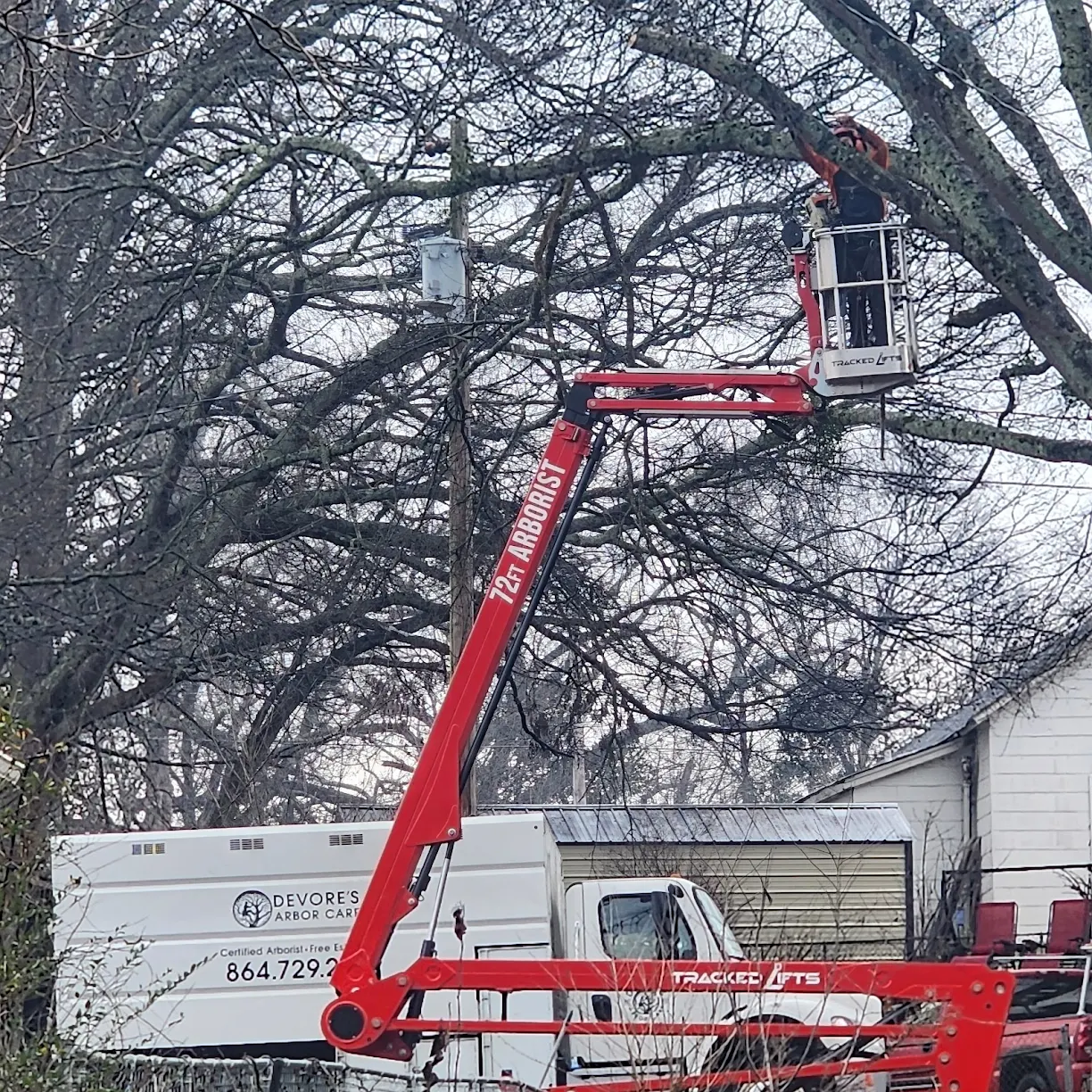
Dangerous tree removal needs proper equipment and training. Heavy limbs can shift. A cracked trunk can break the wrong way. This is not a safe weekend project.
Why Call DeVore’s Arbor Care
DeVore’s Arbor Care is owner-operated and led by an ISA Certified Arborist. The company serves Greenville and the nearby communities in Upstate South Carolina.
They cut down trees help with tree emergencies, trim trees, get rid of stumps, clean up after storms and remove debris. Homeowners get tree care, the tools and full insurance coverage with $1,000,000, in protection.
This is really important when doing tree work near homes, cars, fences and power lines. You can call (864) 729-2761 to ask for an estimate.
Storm Prep Tips for Greenville Homeowners
Check trees before hurricane season and before summer storms become active.
Start with trees near the house, driveway, road, and power lines. These areas carry the most risk.
Book pruning or removal before bad weather enters the forecast. Tree crews get busier after major storms. Early work gives you more time and safer options.
Save this number now: (864) 729-2761.
What to Do After a Storm
Stay away from fallen trees and broken limbs. A branch can still hold pressure. It can move without warning.
Stay clear of downed power lines. Treat every line as live.
Take photos from a safe distance. Call your insurance company after damage to a covered structure. Then call a tree service for cleanup and removal.
DeVore’s Arbor Care handles storm debris cleanup and emergency tree work across Greenville and Upstate SC.
Call Before the Next Storm
A dangerous tree is easier to handle before the wind arrives. Dead branches, trunk cracks, root damage, fungus, and new leaning should not be ignored.
DeVore’s Arbor Care gives Greenville homeowners tree care from an ISA Certified Arborist with personal service and full insurance coverage. The team is available 7 days a week for tree removal, pruning, emergency tree services, and storm cleanup.
Call (864) 729-2761 to request your free estimate.
FAQs
What are the signs a tree is dangerous?
Common signs include dead limbs, a new lean, deep trunk cracks, mushrooms near the base, hollow areas, exposed roots, loose bark, and sudden leaf loss. A tree with several warning signs needs a professional inspection.
How do I know if a tree might fall in a storm?
Look for root movement, a worsening lean, trunk splits, soft wood, and large dead limbs. No one can predict the exact moment a tree will fall, but these signs show higher risk.
Should I remove a tree before hurricane season?
Remove a tree before hurricane season when it is dead, badly cracked, severely leaning, or decayed near the base. An ISA Certified Arborist can tell you if pruning or removal is safer.
Can a leaning tree be saved?
Some leaning trees can be saved. A tree with a long-term natural lean can be stable. A new lean with raised soil or root damage needs fast attention.
Who handles dangerous tree removal in Greenville SC?
DeVore’s Arbor Care handles dangerous tree removal in Greenville SC and nearby Upstate areas. The company is owner-operated, ISA Certified, licensed, and fully insured.
What should I do if a tree falls on my house?
Move everyone away from the damaged area. Stay clear of power lines. Take photos from a safe spot. Call your insurance company, then call a professional tree service for emergency removal.